
মোঃ আব্দুর রহমান
প্রভাষক
১১ জুলাই, ২০২৬ ০৫:২৯ অপরাহ্ণ
প্রভাষক
Digital Literacy among Higher Secondary Students in Bangladesh
Introduction
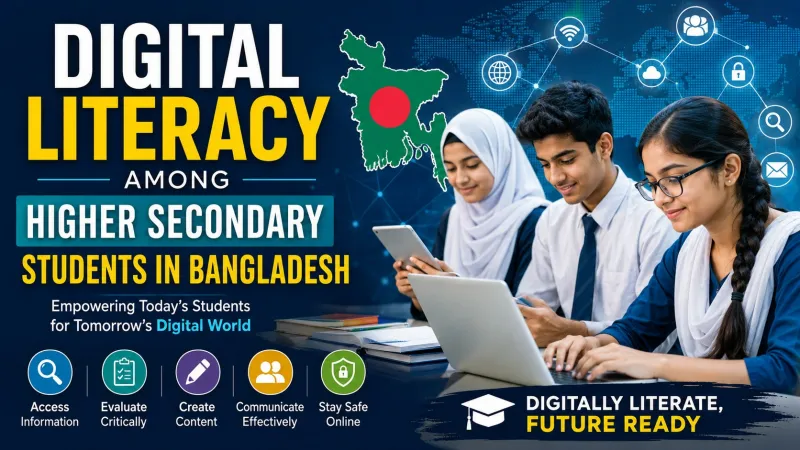
In the twenty-first century, digital literacy has become an essential skill for academic success, career development, and active citizenship. It extends beyond the ability to use computers or smartphones; it includes the capacity to access, evaluate, create, and communicate information responsibly through digital technologies. For higher secondary students in Bangladesh, digital literacy is increasingly important as education becomes more technology-driven. The integration of multimedia classrooms, online learning platforms, artificial intelligence (AI), and digital assessment tools has transformed the educational landscape. However, despite notable progress, many students still face challenges in developing the digital competencies required for higher education and the modern workplace.
Understanding Digital Literacy
Digital literacy refers to the knowledge, skills, and attitudes needed to use digital technologies effectively, safely, and ethically. A digitally literate student can search for reliable information, evaluate online sources critically, create digital content, collaborate through online platforms, and protect personal information from cyber threats. In today's educational environment, digital literacy also includes responsible use of social media, awareness of misinformation, digital communication etiquette, and familiarity with emerging technologies such as artificial intelligence.
The Current Scenario in Bangladesh
Bangladesh has made remarkable progress in expanding access to digital technology through initiatives such as Digital Bangladesh and Smart Bangladesh. Many colleges now have multimedia classrooms, internet connectivity, and access to online educational resources. Students frequently use smartphones, laptops, and tablets for learning purposes.
Nevertheless, digital access does not always translate into digital literacy. Many higher secondary students primarily use digital devices for social networking, entertainment, and communication rather than academic learning. Their ability to conduct online research, verify information, use productivity software, or engage in collaborative digital learning often remains limited. The digital divide between urban and rural institutions further widens the gap in learning opportunities.
Importance of Digital Literacy for Higher Secondary Students
Digital literacy equips students with skills that are indispensable in both academic and professional settings. It enables learners to:
Challenges Facing Higher Secondary Students
Despite increasing technological access, several obstacles hinder the development of digital literacy among Bangladeshi students.
Limited Digital Skills
Many students possess basic operational skills but struggle with advanced digital tasks such as data analysis, academic research, content creation, and information evaluation.
Unequal Access to Technology
Students in rural and economically disadvantaged areas often have limited access to reliable internet services, computers, and digital learning resources.
Insufficient Teacher Training
Although many teachers are enthusiastic about technology integration, some require additional professional development in digital pedagogy, educational technology, and AI-assisted teaching methods.
Information Overload and Misinformation
Students frequently encounter inaccurate or misleading information online but may lack the critical thinking skills necessary to distinguish credible sources from unreliable ones.
Cybersecurity Risks
Many learners are unaware of online privacy, cyberbullying, phishing, identity theft, and digital ethics, making them vulnerable in digital environments.
Strategies for Improving Digital Literacy
Improving digital literacy requires collaborative efforts from educational institutions, teachers, policymakers, parents, and students.
First, digital literacy should be integrated across all subjects rather than being confined to ICT classes. English, science, social science, and business studies can incorporate digital research, online collaboration, and multimedia assignments.
Second, teachers should receive continuous professional development in educational technology, artificial intelligence, and digital teaching methodologies. Skilled teachers can guide students toward meaningful and responsible technology use.
Third, colleges should strengthen digital infrastructure by providing high-speed internet, computer laboratories, multimedia facilities, and access to digital libraries.
Fourth, students should be encouraged to participate in project-based learning that requires online research, digital content creation, teamwork, and presentations. Such activities foster creativity, collaboration, and independent learning.
Finally, awareness programmes on cyber safety, digital citizenship, media literacy, and ethical technology use should become regular components of higher secondary education.
The Role of Artificial Intelligence
Artificial intelligence has become a valuable educational resource for higher secondary students. AI-powered platforms can provide personalized learning experiences, grammar correction, language practice, instant feedback, and intelligent tutoring. However, students must learn to use AI responsibly by verifying AI-generated information, avoiding plagiarism, and maintaining academic integrity. Digital literacy now includes understanding both the capabilities and limitations of AI technologies.
Conclusion
Digital literacy has become a fundamental competency for higher secondary students in Bangladesh. While the country has made significant progress in expanding digital access, strengthening students' digital competencies remains an urgent educational priority. By integrating digital literacy into the curriculum, improving teacher capacity, enhancing technological infrastructure, and promoting responsible digital citizenship, Bangladesh can prepare its young generation to thrive in an increasingly digital world. A digitally literate student is not merely a technology user but a critical thinker, ethical communicator, lifelong learner, and responsible global citizen capable of contributing to the nation's future development.
Md.
Abdur Rahman
Lecturer
in English
Nowhata Govt. Degree College
Paba, Rajshahi
01711062210



১
১ মন্তব্য