
মোঃ আব্দুর রহমান
প্রভাষক
০৭ আগস্ট, ২০২৬ ১০:৩৬ অপরাহ্ণ
প্রভাষক
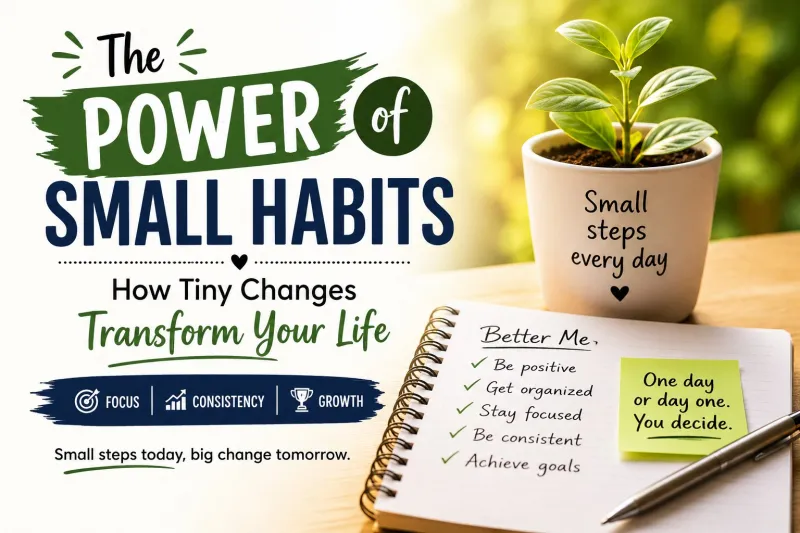
We often believe that meaningful change requires a dramatic decision—a completely new routine, a strict diet, a challenging workout plan, or a major career move. But real and lasting transformation often begins much more quietly.
It begins with a small habit.
Reading a few pages every day, drinking an extra glass of water, waking up ten minutes earlier, spending less time on social media, or writing down three things you are grateful for may seem insignificant. Yet, when these small actions are repeated consistently, they can gradually transform the way we live, think, and feel.
A single healthy choice may not change your life overnight. But repeated choices eventually become patterns, and patterns shape our lives.
Think about saving money. Saving a small amount every day may not seem impressive, but over months and years, those small amounts can become meaningful savings. The same principle applies to learning, health, relationships, and personal growth.
Small habits may produce small results at first, but consistency gives them power.
One of the biggest reasons people fail to develop new habits is that they try to change too much at once.
Someone who has never exercised may suddenly decide to work out for an hour every morning. A person who rarely reads may set a goal of finishing several books a month. These goals sound inspiring, but they can quickly become overwhelming.
Small habits are different.
Instead of exercising for an hour, start with ten minutes. Instead of reading an entire chapter, read two pages. Instead of trying to completely eliminate social media, reduce your screen time by fifteen minutes.
The goal is not to do everything perfectly. The goal is to start and keep going.
Many people give up because they miss a day. They think, “I failed, so there is no point continuing.”
But developing a habit is not about being perfect. It is about returning to the habit again and again.
If you miss one workout, exercise the next day. If you forget to read one evening, pick up your book the following day. One imperfect day does not destroy your progress.
A useful mindset is:
“Never miss twice.”
Missing once is normal. Giving up completely is what turns a small setback into a lasting problem.
Every time you keep a promise you make to yourself, your confidence grows.
Suppose you decide to walk for ten minutes every morning and continue doing it for several weeks. You are not only improving your physical health—you are also proving to yourself that you can set a goal and follow through.
This creates a positive cycle:
Small action → consistency → progress → confidence → bigger goals.
Over time, the person who once struggled to take ten minutes for a walk may become someone who genuinely enjoys an active lifestyle.
You do not need to redesign your entire life today.
Choose one habit that can make your life slightly better.
If you want to read more, start with five pages a day.
If you want to become healthier, start by drinking more water.
If you want to improve your English, learn five new words every day.
If you want to feel calmer, spend ten minutes away from your phone.
If you want to become more organized, spend five minutes preparing for the next day.
The key is to make the habit small enough that you can actually maintain it.
Your environment can influence your behavior more than you realize.
If you want to read regularly, keep a book beside your bed. If you want to drink more water, keep a bottle on your desk. If you want to spend less time on your phone, keep it away while working or studying.
Make good habits visible and convenient. At the same time, make unwanted habits slightly more difficult.
For example, if social media constantly distracts you, remove unnecessary notifications or move those apps away from your home screen.
Small environmental changes can make good decisions easier.
We live in a world that expects quick results. We want immediate success, instant confidence, fast learning, and visible transformation.
But meaningful change takes time.
A seed does not become a tree overnight. Progress can be invisible for a while, even when something important is happening beneath the surface.
Do not underestimate what you are accomplishing simply because the results are not immediately visible.
Keep going. Growth is often happening before it becomes visible.
The greatest strength of small habits is their cumulative effect.
One healthy meal will not transform your body. One book will not make you an expert. One day of studying will not make you a top student. One kind gesture will not change the world.
But repeated over time, these actions can create remarkable results.
Your future is often shaped not by one extraordinary decision, but by the ordinary things you repeatedly do.
You do not need to become a completely different person overnight. You only need to become a little better than you were yesterday.
Choose one small habit. Make it simple. Practice it consistently. Be patient with yourself.
Over time, those tiny changes will begin to shape your identity, your routine, and eventually your life.
Big transformations often begin with very small steps.
So, instead of asking, “How can I change my whole life?” ask yourself:
“What is one small thing I can do today?”
That small thing might just be the beginning of something extraordinary.






১৪
২৪ মন্তব্য