
শিশির সরদার
সহকারী শিক্ষক

১৪ সেপ্টেম্বর, ২০২৬ ০১:০৫ অপরাহ্ণ
সহকারী শিক্ষক
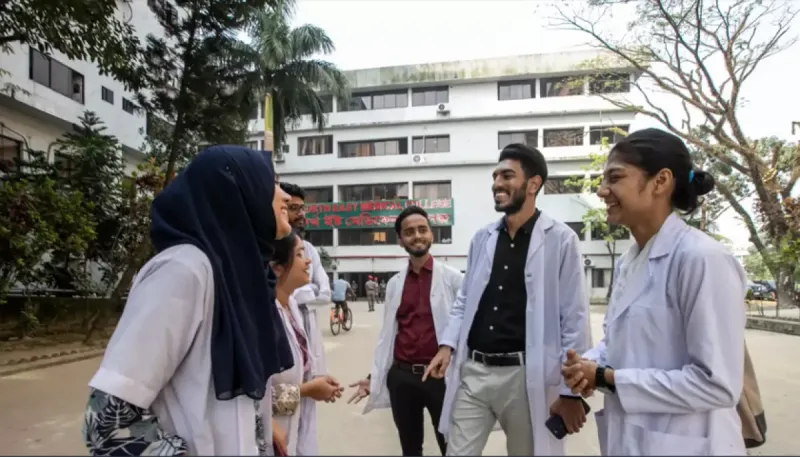
Bangladesh is undertaking a broad overhaul of medical education focusing on a persistent set of problems including inadequate teaching facilities, shortages of qualified faculty, uneven clinical exposure, limited research opportunities and the need for stronger quality assurance.
The reform agenda comes at a time when the country is producing a growing number of medical graduates but continues to face major weaknesses in its health workforce and medical education system.
According to the World Health Organization (WHO), Bangladesh had only 13 doctors, nurses and midwives per 10,000 population in 2022, compared with a global median of 49.
Health Minister Sardar Md Sakhawat Husain on Monday told parliament that only 30,311 doctors are currently working in government hospitals across Bangladesh, while the country needs around 88,909 physicians to meet the minimum doctor-population ratio in line with international standard.
According to a government-funded study conducted in 2026, Bangladesh will need around 88,909 doctors in 2026 to meet the WHO’s minimum standard of 0.50 doctors per 1,000 population, he said.
The Health Ministry, in a document outlining its medical education initiatives, said the government is therefore working on infrastructure, faculty recruitment and development, curriculum reform, simulation-based education, clinical training, research, postgraduate education and accreditation.
More colleges, but quality remains the challenge
The scale of medical education has expanded considerably over the years.
The expansion has created a parallel challenge: ensuring that physical expansion is matched by adequate teachers, laboratories, hospitals, equipment and opportunities for hands-on learning.
A World Bank review of Bangladesh’s tertiary education sector previously identified a chronic shortage of qualified teachers as a major weakness in medical education. It also pointed to inadequate teaching-learning facilities, including laboratories, equipment, medical research journals and internet connectivity, as factors affecting the quality of medical education.
Old buildings, hostels targeted for upgrade





১৪
২৪ মন্তব্য