
খন্দকার মোফাখখার হোসেন
সহকারী শিক্ষক

০৭ ফেব্রুয়ারি, ২০২৩ ০৮:২৯ অপরাহ্ণ
সহকারী শিক্ষক
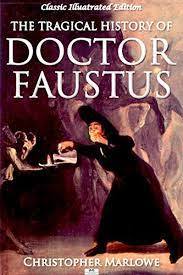
What is Chorus? Discuss the role of the Chorus in Dr. Faustus.
The chorus, a skilled group of dancing singers who fulfilled several tasks, was a crucial component of an ancient Greek play.
In dramatic plays, a single artist performs a variety of roles without being restricted to a particular quality.
In order to lessen the severity of the sad tension, they used to sing lyric poetry.
It also played a crucial part in suggesting how a play's varied movements may remark on the play's characters and activities while enlarging the audience's understanding of an off-stage situation.
The Chorus's format and tenor serve as an example of how the audience and what was done on stage were intertwined.
Dramatic transitions make it possible for the play's story structure to successfully regulate the play's overall atmosphere.
The Chorus makes an appearance in Dr. Faustus four times: at the opening, between acts 2 and 3 and act 4, and lastly at the conclusion.
We learn from Chorus that Christopher Marlowe had no interest in singing about big victories or royal matters in the service of exciting adventures.
As a result, the first Chorus acted as a prologue. It describes the good and terrible fortune that Faustus experienced in his early life and tells us about it.
"Only this gentleman we must perform.
The form of Dr. Faustus's fortune good or bad... "
At the start of the third Act, the Chorus then reappears for the second time, reminding us of Dr. Faustus's adventures during his period of enormous adventure, which he undertook in other nations.
Having knowledge of the planets and other celestial objects, the chorus informs us that Mephistopheles transports him into the heavens.
"He views the clouds the planets and the stars.
The Tropic zones quarters of the sky..."
At the start of Act 4, the Chorus reappears. There has been a time-lapse, and the Chorus once more announces that Dr. Faustus has become known as a famous magician.
And he has gained such a widespread reputation that Charles V has requested him to take his position. He invented his buddy and scholar in his house after leaving the king's royal court to inform them about his illustrious encounter.
"Charles the fifth, at the place now.
Dr. Faustus is feast amongst his noble men..."
The play's very last scene features the Chorus for the final time. The play then derives a lesson from the meteorite's ascension in keeping with the tradition of miracle and morality plays.
And Dr. Faustus's most terrible and horrifying conclusion is made clear to the audience in the somber monologue of the last words.
"Dr. Faustus is gone, regard his hellish fall.
Whose fienful fortune exhort the wise.
Only to wonder at unlawful things..."
In this fashion, the chorus aids in bringing to light the tragic course of a great scholar's life who spent his valuable free time pursuing necromancy.
In the drama Faustus, the chorus unquestionably creates excellent audience involvement.