
মোহা: মনিরুজ্জামান
সহকারী শিক্ষক
২৬ ফেব্রুয়ারি, ২০২৪ ০৮:০৭ অপরাহ্ণ
সহকারী শিক্ষক
ধরনঃ সাধারণ শিক্ষা
শ্রেণিঃ একাদশ
বিষয়ঃ তথ্য ও যোগাযোগ প্রযুক্তি
অধ্যায়ঃ সপ্তম অধ্যায়
Python is a widely used general-purpose, high level programming language. It was created by Guido van Rossum in 1991 and further developed by the Python Software Foundation. It was designed with an emphasis on code readability, and its syntax allows programmers to express their concepts in fewer lines of code. Python is a programming language that lets you work quickly and integrate systems more efficiently. There are two major Python versions: Python 2 and Python 3. Both are quite different.
Before we start Python programming, we need to have an interpreter to interpret and run our programs. There are certain online interpreters like https://ide.geeksforgeeks.org/ that can be used to run Python programs without installing an interpreter. Windows: There are many interpreters available freely to run Python scripts like IDLE (Integrated Development Environment) that comes bundled with the Python software downloaded from http://python.org/. Linux: Python comes preinstalled with popular Linux distros such as Ubuntu and Fedora. To check which version of Python you’re running, type “python” in the terminal emulator. The interpreter should start and print the version number. macOS: Generally, Python 2.7 comes bundled with macOS. You’ll have to manually install Python 3 from http://python.org/.
Just type in the following code after you start the interpreter.
# Script Begins print("GeeksQuiz") # Scripts Ends |
Output:
GeeksQuiz
Let’s analyze the script line by line. Line 1: [# Script Begins] In Python, comments begin with a #. This statement is ignored by the interpreter and serves as documentation for our code. Line 2: [print(“GeeksQuiz”)] To print something on the console, print() function is used. This function also adds a newline after our message is printed(unlike in C). Note that in Python 2, “print” is not a function but a keyword and therefore can be used without parentheses. However, in Python 3, it is a function and must be invoked with parentheses. Line 3: [# Script Ends] This is just another comment like in Line 1. Python designed by Guido van Rossum at CWI has become a widely used general-purpose, high-level programming language. Prerequisites: Knowledge of any programming language can be a plus.
Python vs JAVA
Python | Java |
|---|---|
Dynamically Typed
| Statically Typed
|
| Concise Express much in limited words | Verbose Contains more words |
| Compact | Less Compact |
| Uses Indentation for structuring code | Uses braces for structuring code |
The classical Hello World program illustrating the relative verbosity of a Java Program and Python Program Java Code
public class HelloWorld { public static void main (String[] args) { System.out.println("Hello, world!"); } } |
Python Code
print("Hello, world!") |
Similarity with Java
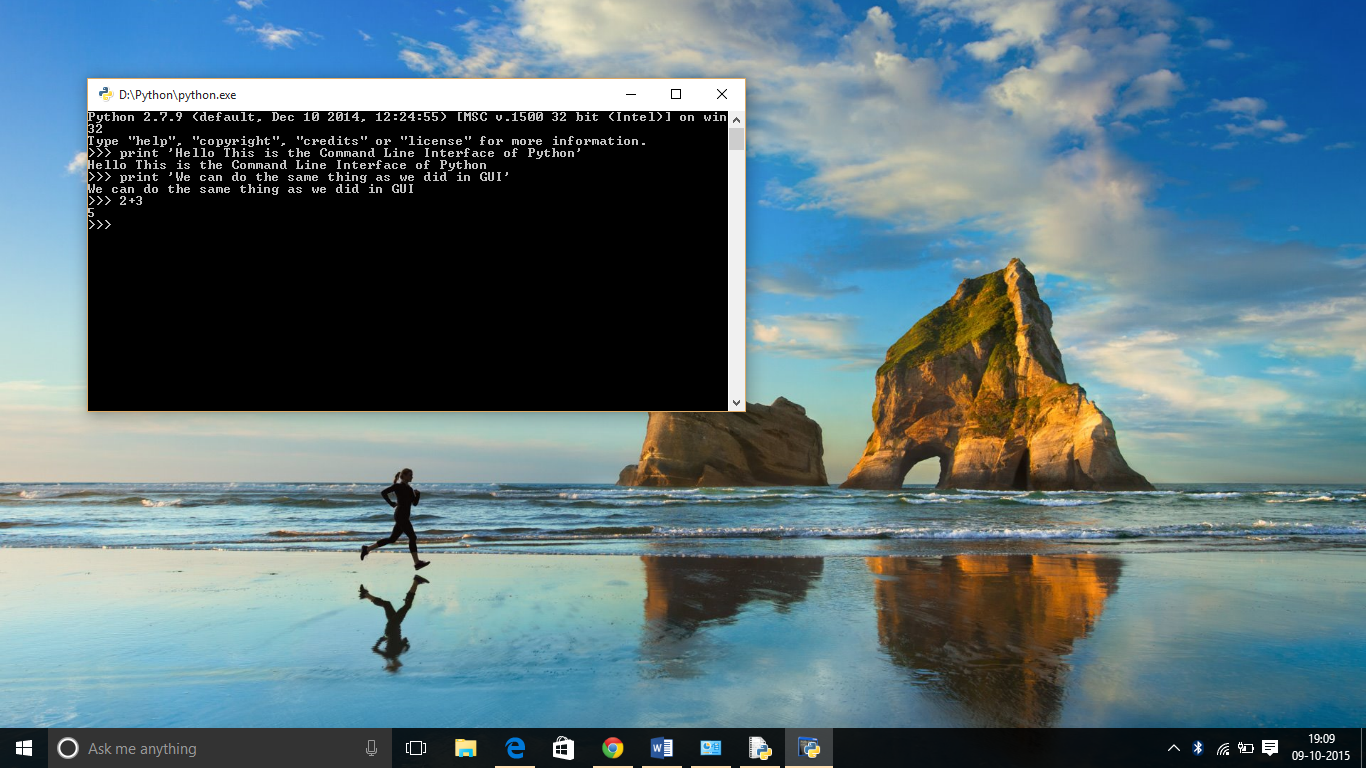
LOOK and FEEL of the Python
GUI
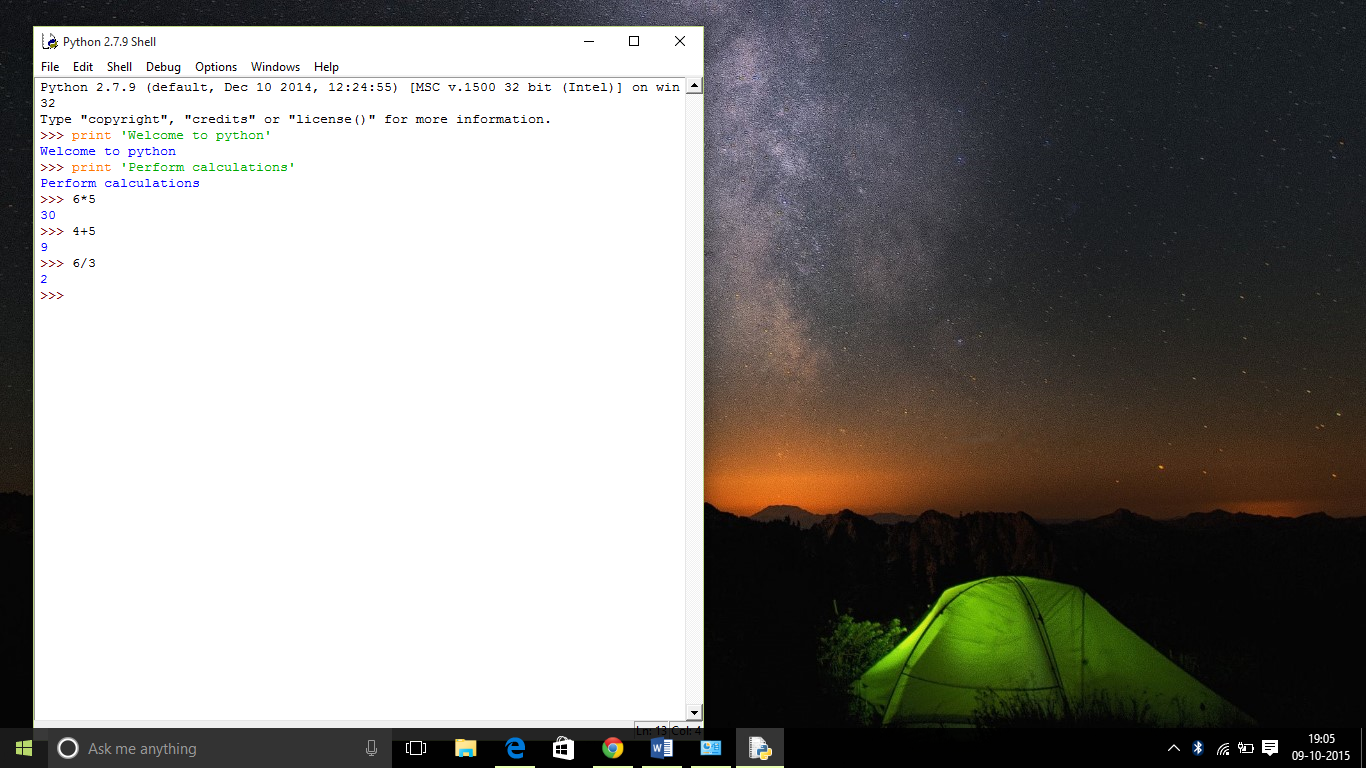
Command Line interface
Softwares making use of Python
Python has been successfully embedded in a number of software products as a scripting language.
Current Applications of Python
Pros:
Cons:
Industrial Importance Most of the companies are now looking for candidates who know about Python Programming. Those having the knowledge of python may have more chances of impressing the interviewing panel. So I would suggest that beginners should start learning python and excel in it.
Python is a high-level, interpreted, and general-purpose dynamic programming language that focuses on code readability. It has fewer steps when compared to Java and C. It was founded in 1991 by developer Guido Van Rossum. Python ranks among the most popular and fastest-growing languages in the world. Python is a powerful, flexible, and easy-to-use language. In addition, the community is very active there. It is used in many organizations as it supports multiple programming paradigms. It also performs automatic memory management.
So before moving on further.. let’s do the most popular ‘HelloWorld’ tradition  and hence compare Python’s Syntax with C, C++, Java ( I have taken these 3 because they are most famous and mostly used languages).
# Python code for "Hello World" # nothing else to type...see how simple is the syntax. print("Hello World") |
Note: Please note that Python for its scope doesn’t depend on the braces ( { } ), instead it uses indentation for its scope. Now moving on further Lets start our basics of Python . I will be covering the basics in some small sections. Just go through them and trust me you’ll learn the basics of Python very easily.
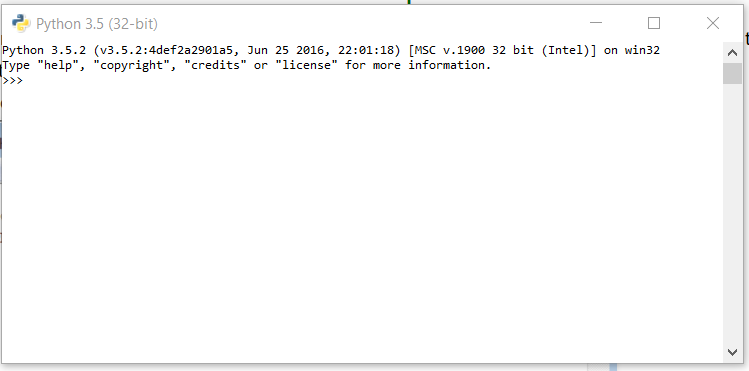
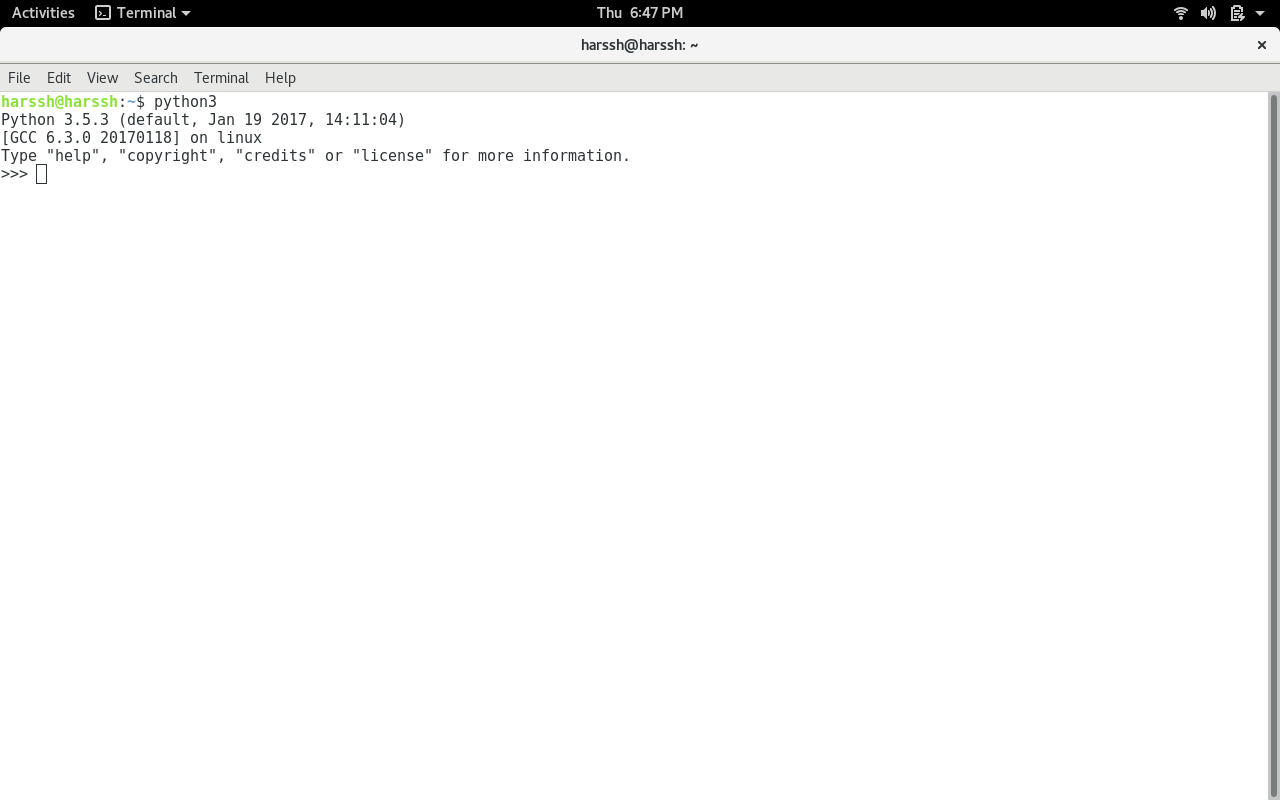
The ” >>> ” represents the python shell and its ready to take python commands and code.In other programming languages like C, C++, and Java, you will need to declare the type of variables but in Python you don’t need to do that. Just type in the variable and when values will be given to it, then it will automatically know whether the value given would be an int, float, or char or even a String.
# Python program to declare variables myNumber = 3print(myNumber) myNumber2 = 4.5print(myNumber2) myNumber ="helloworld"print(myNumber) |
3
4.5
helloworld
See, how simple is it, just create a variable and assign it any value you want and then use the print function to print it. Python have 4 types of built in Data Structures namely List, Dictionary, Tuple and Set. List is the most basic Data Structure in python. List is a mutable data structure i.e items can be added to list later after the list creation. It’s like you are going to shop at the local market and made a list of some items and later on you can add more and more items to the list. append() function is used to add data to the list.
# Python program to illustrate a list # creates a empty list nums = [] # appending data in list nums.append(21) nums.append(40.5) nums.append("String") print(nums) |
[21, 40.5, String]Comments:
# is used for single line comment in Python
""" this is a comment """ is used for multi line comments
Input and Output
In this section, we will learn how to take input from the user and hence manipulate it or simply display it. input() function is used to take input from the user.# Python program to illustrate # getting input from user name = input("Enter your name: ") # user entered the name 'harssh' print("hello", name) |
hello harssh
# Python3 program to get input from user # accepting integer from the user # the return type of input() function is string , # so we need to convert the input to integer num1 = int(input("Enter num1: ")) num2 = int(input("Enter num2: ")) num3 = num1 * num2 print("Product is: ", num3) |
Enter num1: 8 Enter num2: 6 ('Product is: ', 48)
Selection
Selection in Python is made using the two keywords ‘if’ and ‘elif’ and else (elseif)# Python program to illustrate # selection statement num1 = 34if(num1>12): print("Num1 is good") elif(num1>35): print("Num2 is not gooooo....") else: print("Num2 is great") |
Num1 is good
Functions
You can think of functions like a bunch of code that is intended to do a particular task in the whole Python script. Python used the keyword ‘def’ to define a function. Syntax:def function-name(arguments):
#function body# Python program to illustrate # functions def hello(): print("hello") print("hello again") hello() # calling function hello() |
hello
hello again
hello
hello again
Now as we know any program starts from a ‘main’ function…lets create a main function like in many other programming languages.
# Python program to illustrate # function with main def getInteger(): result = int(input("Enter integer: ")) return result def Main(): print("Started") # calling the getInteger function and # storing its returned value in the output variable output = getInteger() print(output) # now we are required to tell Python # for 'Main' function existence if __name__=="__main__": Main() |
Started Enter integer: 5As the name suggests it calls repeating things again and again. We will use the most popular ‘for’ loop here.
# Python program to illustrate # a simple for loop for step in range(5): print(step) |
0 1 2 3 4Python has a very rich module library that has several functions to do many tasks. You can read more about Python’s standard library by Clicking here ‘import’ keyword is used to import a particular module into your python code. For instance consider the following program.
# Python program to illustrate # math module import math def Main(): num = -85 # fabs is used to get the absolute # value of a decimal num = math.fabs(num) print(num) if __name__=="__main__": Main() |
85.0
Python Programming Foundation -Self Paced Course
New to the programming world, don’t know where to start? Start with beginner-friendly Python Programming Foundation -Self Paced Course designed for absolute beginners who wish to kickstart and build their foundations in Python programming language. Learn Python basics, Variables & Data types, Operators etc and learn how to solve coding problems efficiently in Python. Don’t wait, sign up now and kickstart your Python journey today.
DS Using Python Programming – Self Paced Course
If you’re curious to upgrade your Python skills, you’ve come to the right platform! In this DS Using Python Programming – Self Paced Course, designed for Python enthusiasts where you’ll be guided by the leading industry experts who will explain in-depth, and efficient methods to implement data structures such as heaps, stacks, and linked lists etc. So, what are you waiting for? Advance your Python skills today.
Don't miss your chance to ride the wave of the data revolution! Every industry is scaling new heights by tapping into the power of data. Sharpen your skills and become a part of the hottest trend in the 21st century.
Dive into the future of technology - explore the Complete Machine Learning and Data Science Program by GeeksforGeeks and stay ahead of the curve.