মুহাম্মদ নিজামউদ্দিন
সহকারী অধ্যাপক
৩০ অক্টোবর, ২০২৬ ১২:৩২ পূর্বাহ্ণ
সহকারী অধ্যাপক
ধরনঃ সাধারণ শিক্ষা
শ্রেণিঃ একাদশ
বিষয়ঃ রসায়ন ১ম পত্র
অধ্যায়ঃ দ্বিতীয় অধ্যায়: জৈব রসায়ন
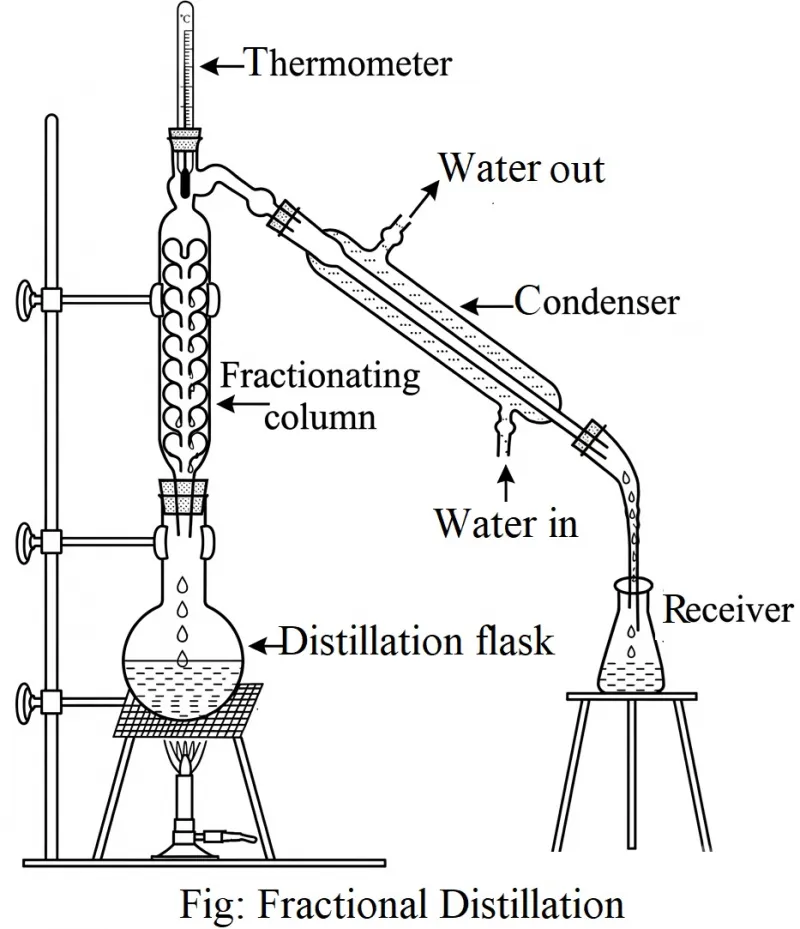
The distillation process in which the components of a mixture are separated part by part according to their boiling points with the help of fractionating column is called fractional distillation. Liquids having boiling point difference less than 25-40°C are separated by fractional distillation.
Description: The apparatus used for fractional distillation consists of a distillation flask fitted with a fractionating column, a thermometer, a condenser, and a receiver flask. The mixture of liquids to be separated is placed in the distillation flask. The thermometer is positioned at the top of the fractionating column to measure the temperature of the vapours entering the condenser.
When the mixture is heated, vapours of both liquids are produced. As these vapours rise through the fractionating column, they undergo repeated condensation and vaporization. The liquid with the higher boiling point condenses more readily and flows back into the distillation flask, while the liquid with the lower boiling point vaporizes again and continues to move upward through the column. As a result, the vapour reaching the top of the column becomes progressively richer in the more volatile component.
The enriched vapour then passes into the condenser, where it is cooled by circulating water and condensed into a liquid. The condensed liquid, called the distillate, is collected in the receiver flask. The less volatile liquid remains in the distillation flask. By this repeated process of condensation and vaporization within the fractionating column, liquids having close boiling points can be effectively separated.